When the image becomes the brief.
I followed an AI-generated chair from a convincing image into 3D, then found myself defending the part that made it unstable. The problem was bigger than the base.
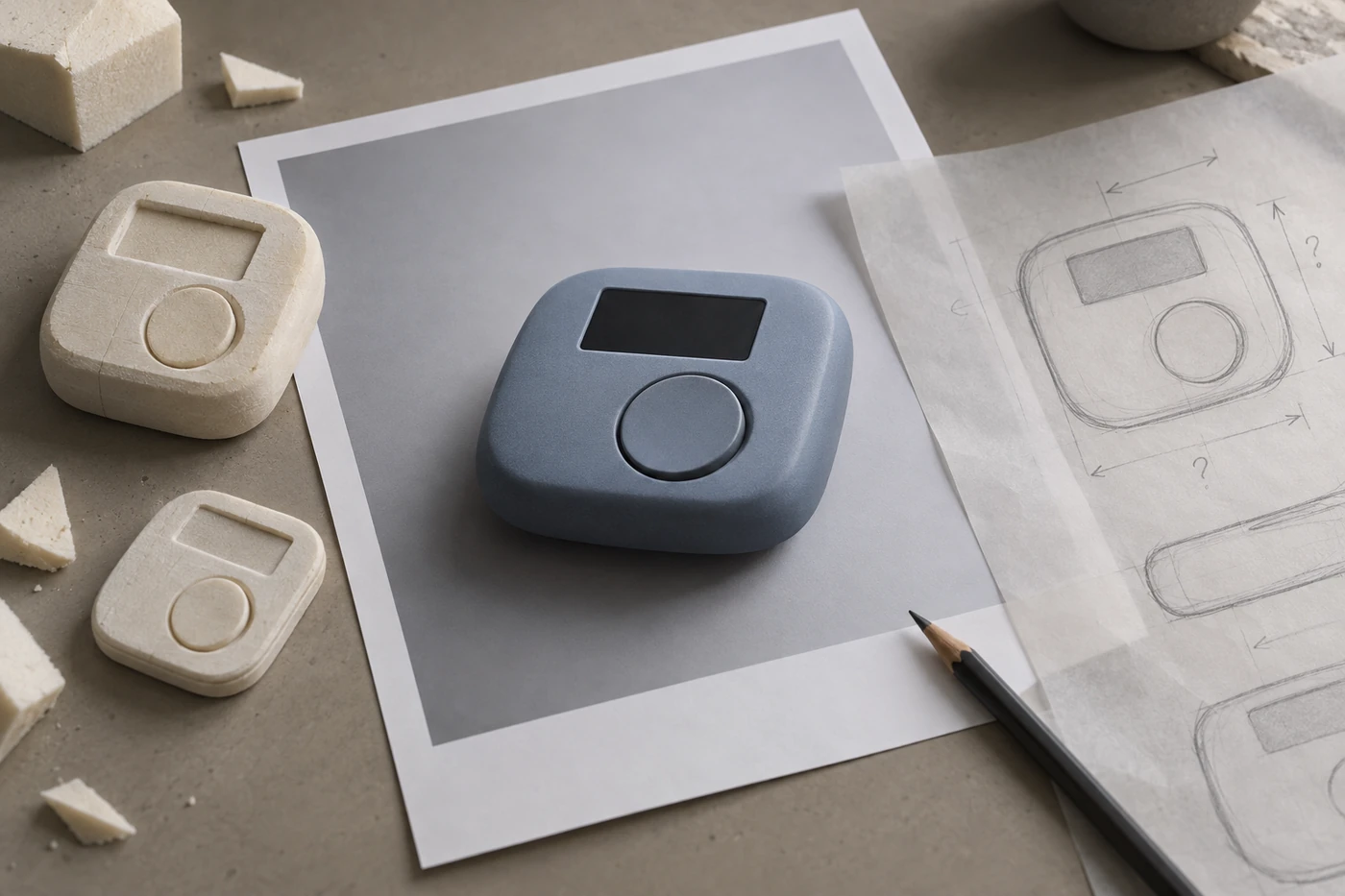
I chased the promise of instant prompt-to-render. Then I tried to build the results in 3D.
The appeal was easy to understand. A prompt could produce a concept in seconds that looked ready to present. It wasn’t perfect, but it was legible and believable. I could explore more directions, including aesthetics I might never have arrived at on my own. That promise was real. The trap was in how I used it.
Over the past few years, I’ve been taking AI concepts through 3D translation, ergonomic review, structural thinking and manufacturing constraints. Moving beyond the image kept exposing the same problem: a design could feel decided long before I had made the decisions that should support it.
In industrial design, form normally accumulates reasons. The brief, function, ergonomics and cost narrow the possibilities. Dozens of small choices add up to the result. The process can move back and forth, but there is a relationship between what the object needs to do and the shape it takes.
Prompt-to-render can reverse that relationship. A polished image arrives first, and I fill in its logic afterwards. The image already has proportions, materials and details I respond to. Before I’ve worked out whether they make sense together, I can become attached to keeping them.
At that point, the task quietly changes. I’m trying to justify the form instead of allowing the constraints to change it. The image has become the brief.
One seating concept made this uncomfortable to admit. I had worked through the joinery and rationalised the load paths in the model. Then I realised the base I’d fallen in love with made the whole thing dangerously tippy.
I had been resolving how the parts would go together while overlooking a more basic question about the whole. Instead of questioning the base, I was defending an image I had committed to emotionally. More detailed work had carried the same unchecked assumption further along.
I still want the freedom these tools offer. I also need a process that gives me reasons to stop and reconsider. Ergonomics, structure, assembly and cost need checkpoints while the direction is still open to change. If a check challenges the feature I like most, that has to be allowed to change the design.
The AI-assisted coding workflow is a useful reference point: plan, build, test, debug, repeat. The first output starts a process. In product work, too, each step needs to tell us something that the next image alone cannot.
AI can widen the possibilities. What I learned from that chair is how easily I can narrow them again by falling in love with the first convincing one.