Design's AlphaGo moment.
What happens to professional intuition when a machine finds a good answer we would have dismissed?
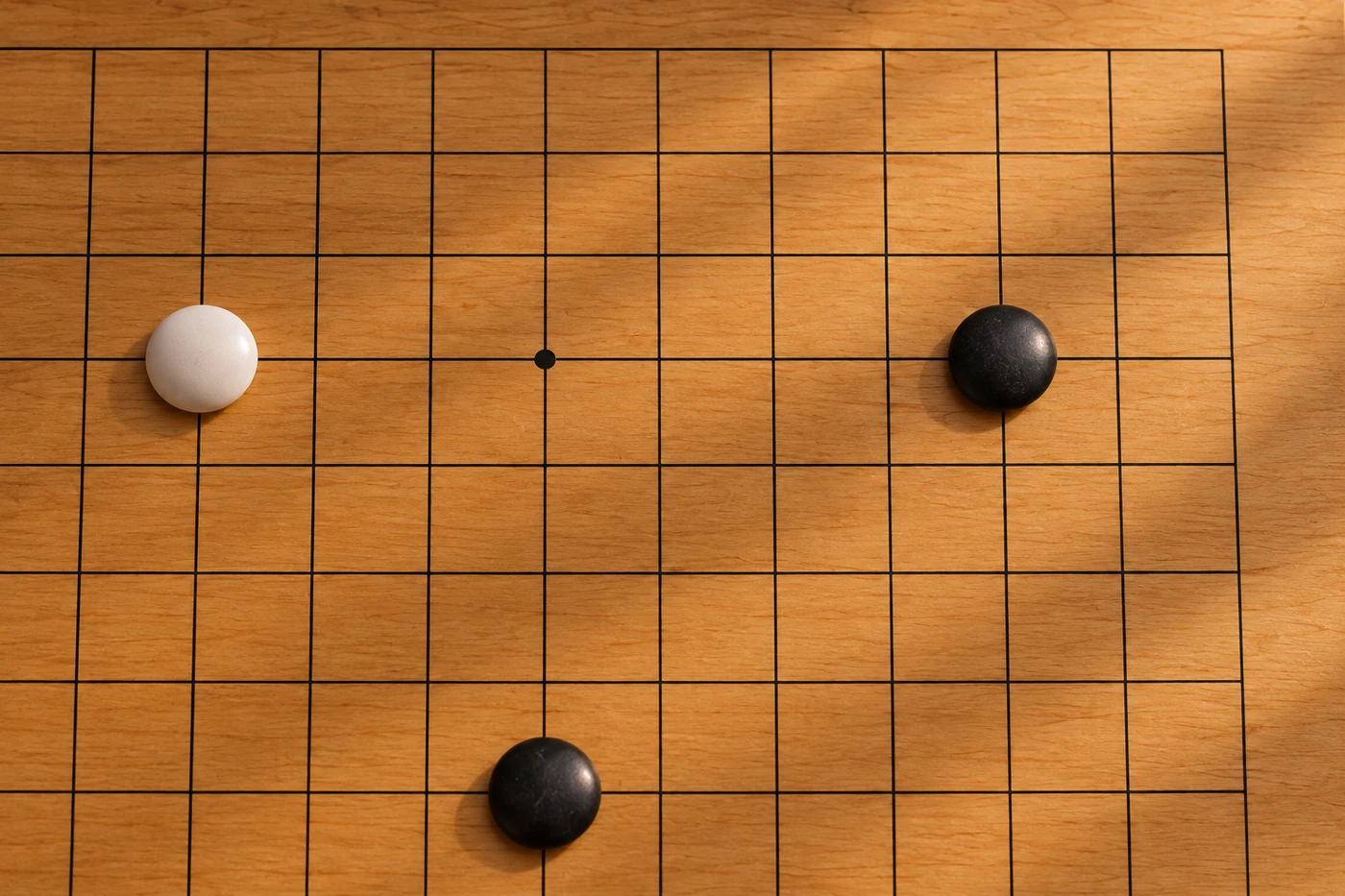
Imagine reaching the top of your field, then watching a machine succeed with a decision you would have dismissed. What do you do with everything experience has taught you?
An interview with Lee Sedol brought that question into focus for me. In 2016, AlphaGo defeated him in a five-game match. The result was striking enough. But the part that stays with me is how it challenged people's sense of what a good move could look like.
In the second game, AlphaGo played its now-famous move 37. DeepMind estimated that a human player would choose it about once in ten thousand times. A move could look unfamiliar, even wrong, and still reveal a possibility that established habits had made difficult to see.
That is an uncomfortable thought when your profession depends on judgment. Experience helps you recognise patterns and make decisions without starting from zero each time. It also gives you expectations. The two can become difficult to separate.
Later, AlphaGo Zero learned through self-play without first studying human games. That development made the question sharper: what might a system discover if it does not begin with the conventions we have inherited?
For design, I find that possibility most interesting before an object takes shape. We already discuss AI's role in generating images. I wonder what happens when it becomes more useful in research, briefs and strategy—when it starts challenging what we should make, for whom and why.
The comparison has a limit. Go has a defined board, rules and an outcome. A design brief can contain competing needs, and people may disagree about what a successful outcome should be. Calling something the correct answer does not settle whose needs it serves.
Still, I do not think that difference makes the question go away. If a system can show us a possibility we would have ruled out, our expertise has to help us examine it. Rejecting it because it feels wrong would be as limiting as accepting it because AI proposed it.
I keep coming back to initiative. If AI begins to suggest what to make and why, how do we lead the decision? What do we contribute when the most promising direction is one our experience tells us to reject?